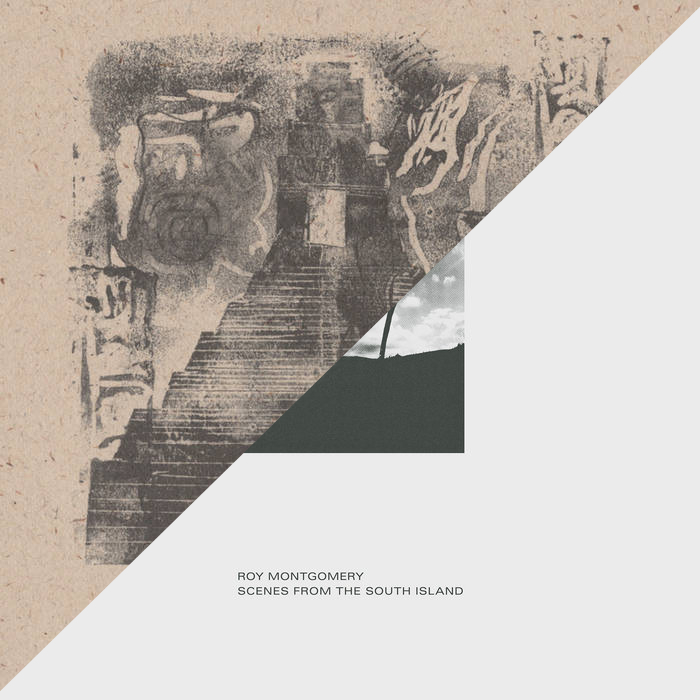
These first two albums by NZ guitarist (and occasional singer) Roy Montgomery are both masterpieces and foundational works of guitar-oriented ambiance. They’ve enjoyed lasting influence and popularity, particularly Temple IV which remains widely regarded as his magnum opus. I consider these two records inseparable and equally special. Both were recorded on 4 tracks in 1995 and both are the sound of a man in his mid 30s laying pure emotion to tape in real time as he processes a life spent abroad, the death of his wife, and becoming a solo traveler and young widower.
As a (mostly) instrumental artist and guitarist with a lasting influence, really progressive ideas and interesting home production techniques, Roy has long been associated with a kind of intelligent prog/experimental music. That’s certainly deserved but not the entire picture. Especially in these first two records I encourage you to listen to them as deeply emotional, seminal works of modern primitivism and outsider music. They’re four track recordings by someone who can’t read or write music, was unsatisfied playing live, and whose few extended techniques are born explicitly from his modest skill and long hours spent messing around in solitude. He brings almost no outside musical influence from anything- not the Dunedin sound of his home, not the UK pop legends he brushed shoulders with, nor the folk music he must have heard on his many travels. These are purely introspective records. But the emotional depth and range that they possess is a world unto itself.

The first album, ’95s Scenes From South Island, is a long look back at a home repeatedly left behind. These songs are portraits of the sweeping New Zealand vistas that give many of these tracks their names but more than that they’re memories. The songs on Scenes From South Island convey the great beauty of NZ as inseparable from leaving it behind- from the first time you see something moment begins to fade into a memory, a memory into a feeling, a feeling into a belief. They’re soothing at times but also adrenaline inducing, with huge walls of distortion and feedback. I find the raw emotion that Roy conveys sets him apart from other post-rock guitar contemporaries more clinical, intellectual approach. Likewise this record is a lot more exciting, maximalist and sometimes confrontational than ambient/new age music is generally willing to be.

The second album, ’96s Temple IV, is decidedly the grief record. Though the guitar playing on this one is exceptionally focused as well, I think it’s the themes that continues to resonate with people so strongly. The record gets it’s namesake from the Mayan temple in the Guatemalan rainforest that he visited and the presumably pivotal moment in his grieving which happened there. Some songs reflect on the unreality of being left behind when someone passes and having to confront the physical nature of death itself. Some capture the rawest emotions of grief. The whole record is just beautiful, thoughtful guitar playing. Compared to Scenes from South Island the songs are less complete by themselves and more tied together, almost suite-like, illustrating a long inward journey.
A wide breadth of listeners will enjoy these two different but complementary classics. They’re so effective on so many levels- as pure guitar records, ambient music, emotional lo-fi, foundational post-rock. They’re monumental works that mark the beginnings of Roy Montgomerys storied career, which has a lot to offer fans of psychedelic and improvised music. For collectors out there, both of these records have received excellent reissues recently that are already getting hard to find. Don’t be surprised if you end up spending a lot of time with these two albums.
No responses yet